
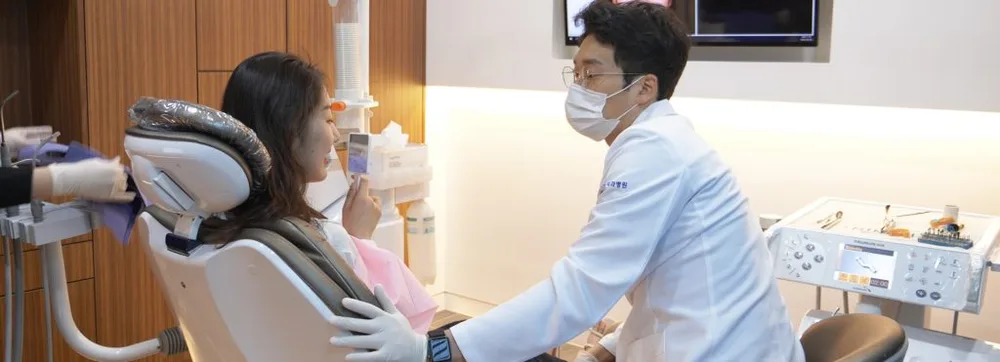
Teeth whitening is a cosmetic dental procedure aimed at removing stains and discoloration from teeth, making them appear lighter and brighter. Treatment options cover not only discolored teeth but also discolored gums and devitalized teeth — enhancing your smile and boosting confidence.
What Causes Teeth Discoloration?
External Factors
- Food & drinks — coffee, tea, wine, chocolate
- Smoking — nicotine and tar deposits over time
Internal Factors
- Aging — enamel thins, yellower dentin shows
- Trauma — internal staining from damaged blood cells
- Root canal treatments & medications (tetracycline, fluoride)
In-Office Whitening Process
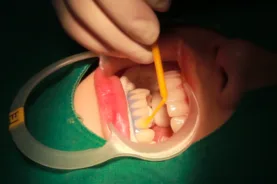
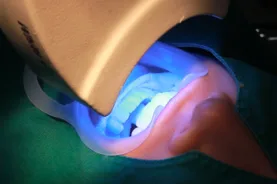
Highly concentrated bleaching agents are applied directly to the teeth under professional supervision for immediate, significant results. The process is safe, effective, and monitored by medical staff throughout.


At-Home Whitening Process
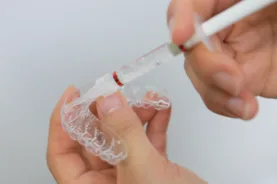
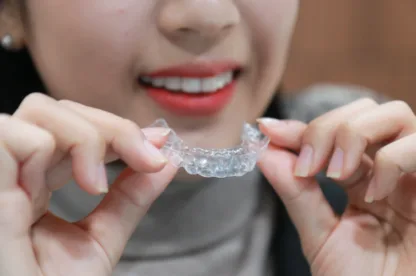
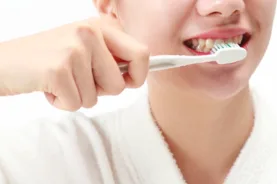
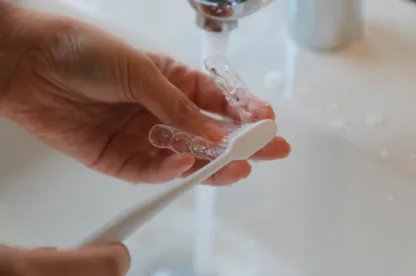
Using lower-concentration bleaching agents (~10–15% hydrogen peroxide) with custom-made whitening trays, patients can gradually whiten teeth at home under a prescribed regimen — appreciated for its convenience and controllable results over time.
Non-Vital (Internal) Whitening
For necrotic (dead) teeth where the pulp has lost vitality — typically appearing gray or dark brown due to hemoglobin breakdown — internal whitening penetrates the tooth to remove discolored parts from inside. Can only be performed in-clinic.
* If the pulp has dried out, non-vital whitening may not be possible. A consultation is required to determine viability.
Gum Bleaching
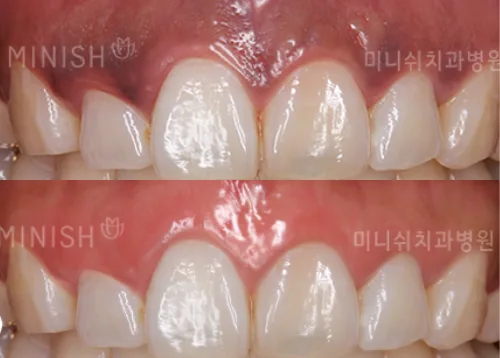
Gum bleaching (gum depigmentation) lightens excessive melanin pigmentation in the gums — revealing a more uniform, healthy pink color. Using specialized techniques including laser technology, the melanin in the gum's outer layer is carefully removed, similar to skin peeling.
When to Consider Gum Bleaching:
- Dark gums from congenital or acquired melanin deposition
- Discoloration from metal prosthetics or smoking
- Sun-exposure-related gum darkening
Healing timeline: Discolored gums → melanin removal → uniform pink gums within 1–2 weeks.
How Long Do Results Last?
Whitening effects typically last around one year. Longevity depends on diet, oral hygiene, and tobacco use. Minimizing coffee, tea, wine, and smoking helps maintain brightness.
When Teeth Whitening Isn’t Possible
For congenital discoloration, severe tetracycline staining, aging-related darkening, nerve-damaged teeth, or rough tooth surfaces — whitening alone may produce limited results. In such cases, veneers offer a permanent alternative.
| If you... | Whitening Result | Veneers Instead |
|---|---|---|
| Have white spots | Spots become more visible | Spots will be fully covered |
| Want a specific shade | 1–1.5 shades lighter only | Precisely select from full shade range |
| Have thin/sensitive teeth | Increased sensitivity & erosion risk | 0.1mm shaving — protective barrier |
| Want to fix gaps/chips too | Only color is treated | Color + shape correction in one visit |
| Want permanent results | Lasts months to ~2 years | Semi-permanent durability |
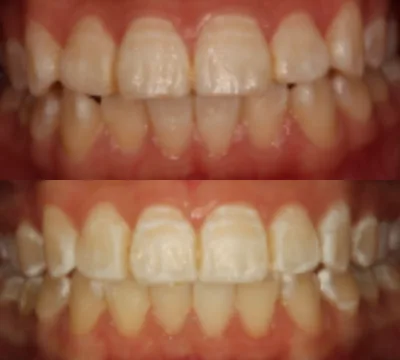
White spots are more prominent after whitening
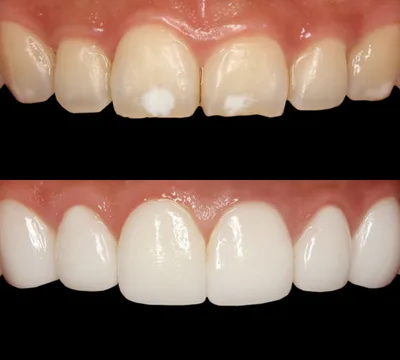
Veneers provide an ideal solution for white spots
Post-Treatment Precautions
- Avoid smoking for 48 hours after treatment
- Avoid staining foods & drinks — red sauce, berries, coffee, tea
- Mild sensitivity may occur for 1–2 days — normal and temporary
- Immediate results may appear dramatic due to minor dehydration — color tones down naturally as teeth rehydrate
- Existing crowns and fillings will not whiten and may need replacing