What Is the Korean Cupping Therapy (부항)?
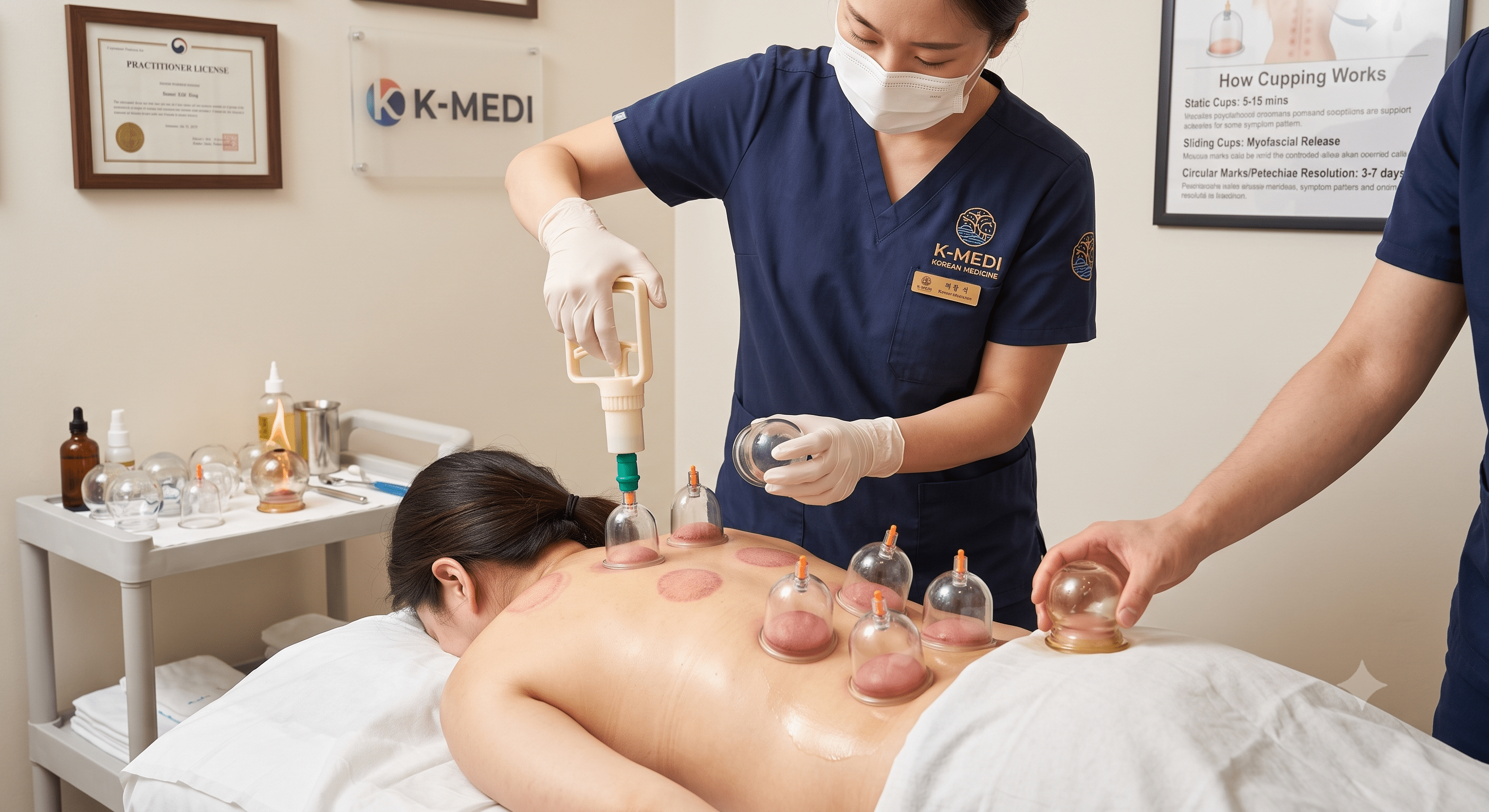
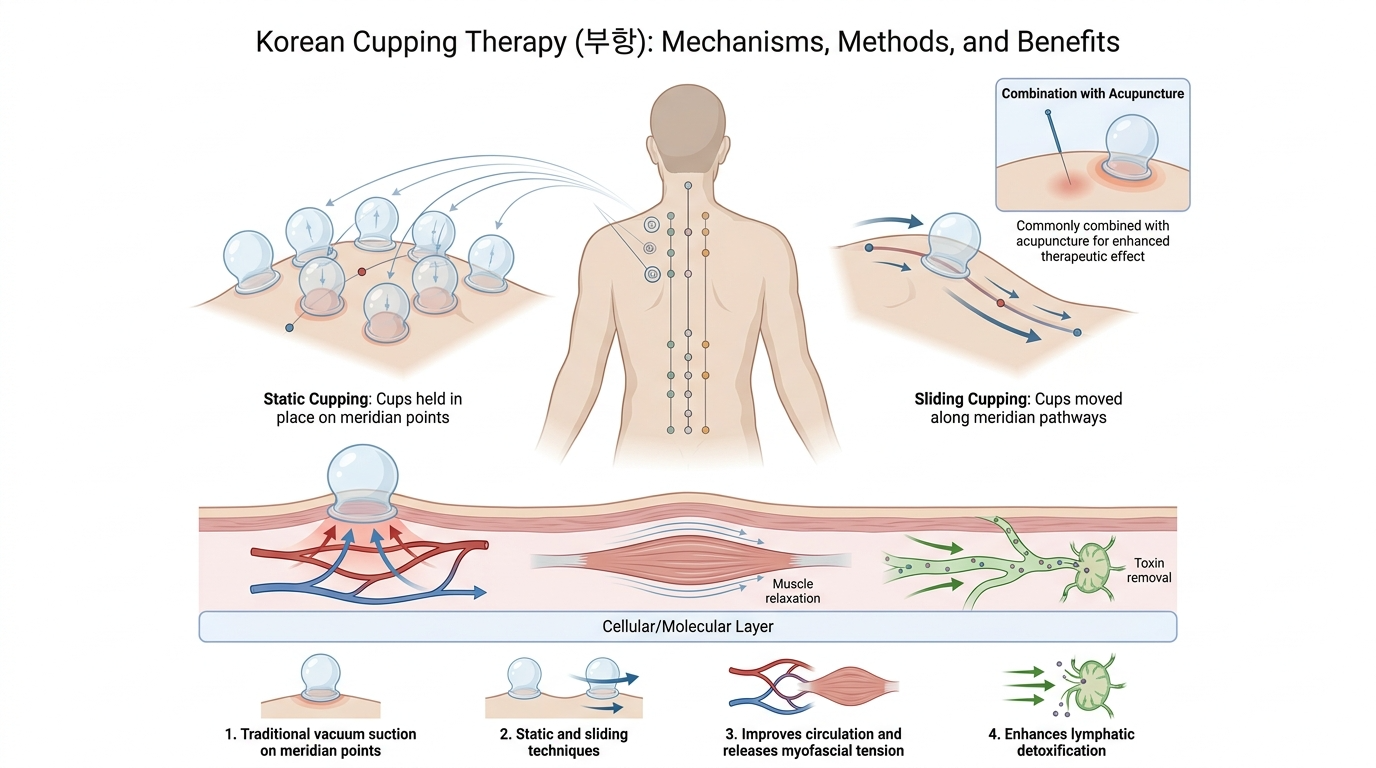
Korean Cupping Therapy (부항) uses vacuum suction cups applied to the skin at meridian points to draw stagnant blood and metabolic waste products to the surface — improving local circulation, releasing myofascial tension, and promoting the natural elimination of toxins via the lymphatic system.
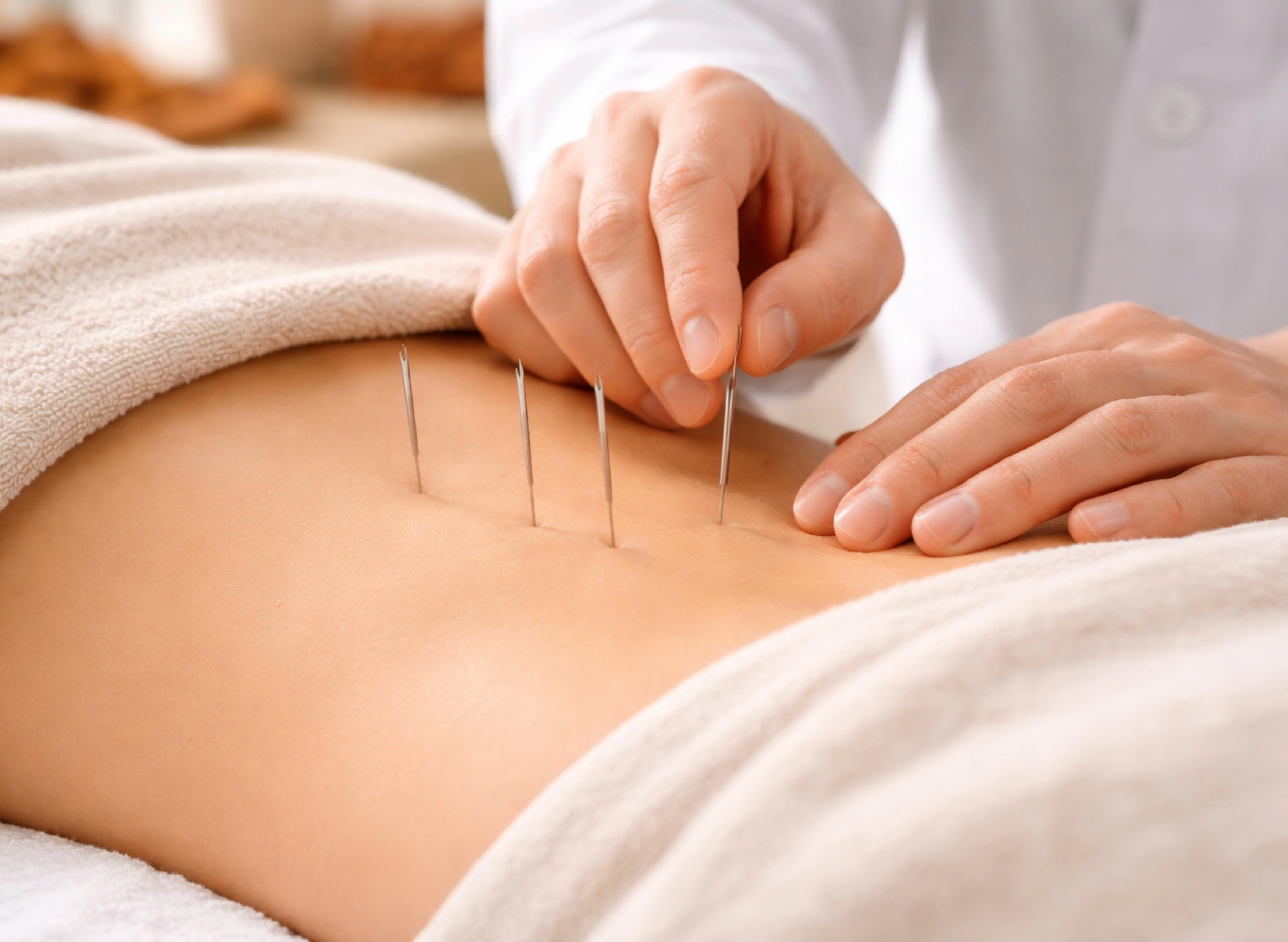
Korean cupping uses both static cupping (cups held in place) and sliding cupping (cups moved along meridian pathways) to address different tissues and conditions. It is commonly combined with acupuncture for enhanced effect.
- Traditional vacuum suction on meridian points
- Static and sliding techniques available
- Improves circulation and releases myofascial tension
- Commonly combined with acupuncture
What's Included in the Cupping Therapy Session?
Why Choose Korean Cupping Therapy at K-Medi?
Unlike deep tissue massage which applies pressure from outside, cupping creates negative pressure — lifting and separating tissue layers to increase blood flow in areas of stagnation that compression cannot reach. Korean cupping practiced at licensed Korean Medicine clinics uses precisely calibrated suction levels and targeted meridian application, producing more systematic results than the generalized back cupping seen in wellness spas.
- Negative pressure — reaches tissue planes compression cannot
- Meridian-targeted application by licensed practitioner
- Effective combined with acupuncture for acute conditions

How Korean Cupping Therapy Works
The practitioner identifies target areas based on your symptom pattern and meridian assessment. A thin layer of oil is applied to allow sliding cups to move smoothly. Cups are placed at meridian points, and vacuum is created either by flame (fire cupping) or mechanical pump. Static cups are held for 5–15 minutes; sliding cups are moved along meridian pathways for myofascial release.
Circular marks (petechiae) on the skin after cupping are normal and expected — they indicate areas of stagnant blood being drawn to the surface and typically resolve within 3–7 days. The intensity of the marks corresponds to the degree of local stagnation and fades with subsequent sessions.